

SERF Ablation
A new energy modality designed to transform VT therapy.
Thermedical is advancing thermal ablation
Saline Enhanced Radiofrequency (SERF) with the Durablate® Catheter is engineered to reach abnormal electrical circuits deep within scarred ventricular tissue, delivering a fundamentally different approach to treating ventricular tachycardia.
Controlled
The electrophysiologist sets the lesion dimensions. SERF delivers RF energy and heated saline inside the myocardium, so lesion volume is something you dial in rather than something the tissue dictates. In preclinical studies, lesion dimensions were reproducible to within 15%.
Preclinical findings. Clinical significance has not been established.
Right-sized
Lesions can be as small as conventional RF or Transmural when the case requires it. One catheter covers the range and the electrophysiologist decides where in that range to work.
Preclinical findings. Clinical significance has not been established.
Cleaner
Less debris left generated. Because energy is delivered within the muscle and the saline is degassed, SERF produces less embolic material, particulates and microbubbles than conventional RF ablation in a procine model.
Preclinical findings. Clinical significance has not been established.
VT remains one of the most lethal cardiac arrhythmias
Despite advances in mapping and imaging, treatment options are limited:
Traditional RF ablation was designed for atrial tissue
Ventricular substrate is deeper, thicker and often intramural
Lesions are difficult to create predictably and reproducibly
Recurrence rates remain high, especially in structural heart disease
Introducing SERF:
a new class of thermal ablation
Developed by alumni of the MIT Hyperthermia Center, the SERF Ablation System with the Durablate® Catheter uses convective thermal transfer to create large, controlled, volumetric lesions.
This approach enables:
Enhanced penetration into deep intramural tissue
More uniform thermal profiles independent of surface contact alone
Rapid lesion formation
Reduced dependence on prolonged energy delivery
“A patient had been living with dangerous heart rhythms that kept returning despite several previous ablations, as the circuits were very difficult to reach. Using the SERF technique, we were able to stop the abnormal rhythm during the procedure completely. If these results hold over time, SERF could change what we can offer patients who are still living with the fear of another shock.”
— Katia Dyrda, MD, MSc, FRCPC, Cardiac Electrophysiologist, Montreal Heart Institute; Associate Professor, Université de Montréal


Can reach VT circuits within scarred ventricular tissue inaccessible to conventional RF.
Has successfully terminated VT in patients who have prior failed ablations and pharmacologic therapy.
Early Clinical Experience
Initial human and preclinical use demonstrates that SERF:
Reduces the amount of microparticles and microbubbles that conventional RF ablation causes.
Shows promising feasibility and safety in early studies.
These signals suggest SERF has the potential to reshape VT therapy.


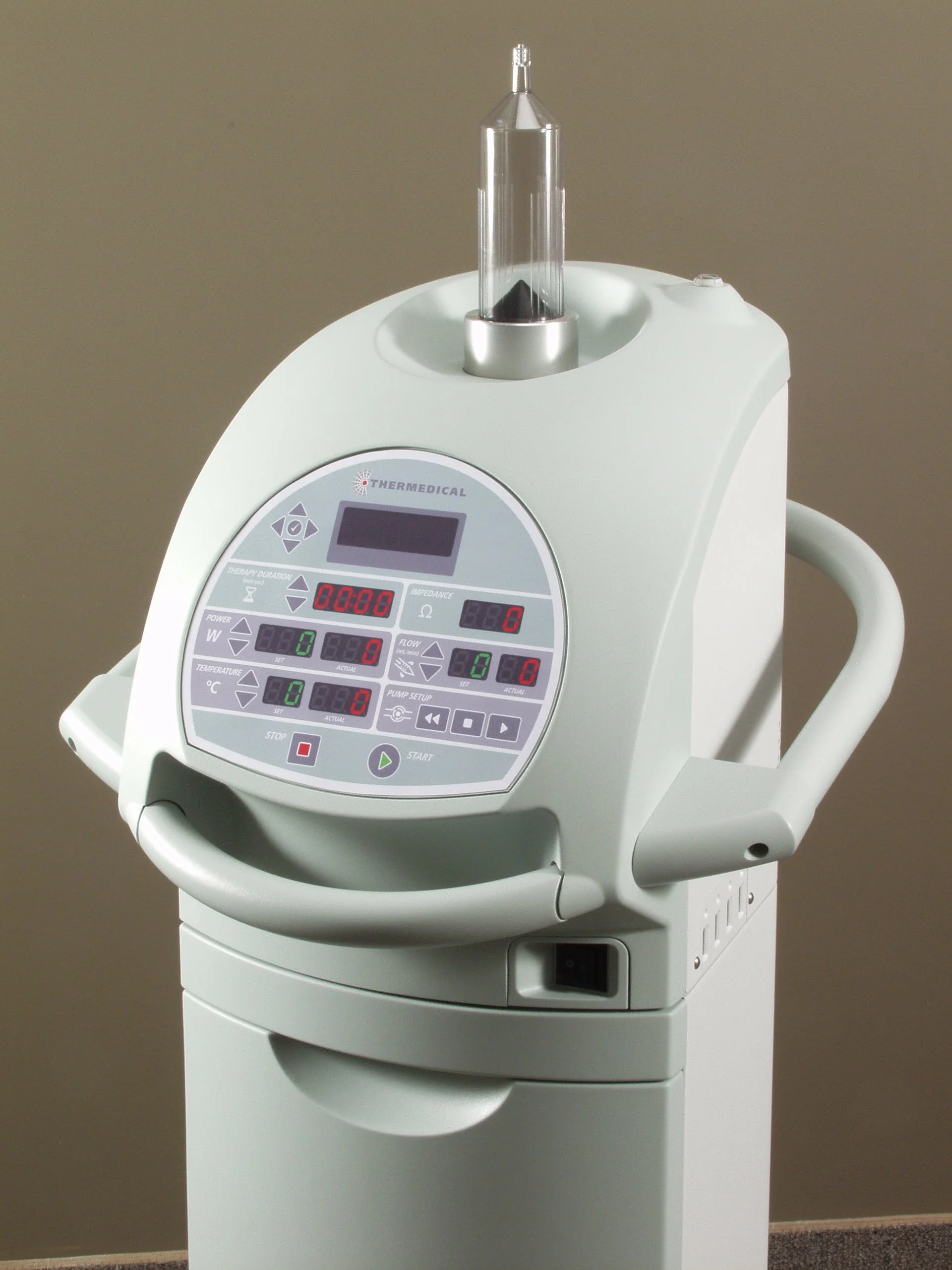
Designed for today’s EP lab — and tomorrow’s clinical needs
SERF integrates into existing workflows while offering a new capability: the ability to create deeper, more predictable lesions within ventricular myocardium.
As the burden of VT continues to grow, Thermedical is committed to advancing technologies that meaningfully improve patient outcomes and expand the tools available to electrophysiologists.

Partner with Thermedical
We’re collaborating with leading investigators to evaluate SERF in patients with refractory VT. For partnership or study inquiries, contact us below.